
Erie County Previous Resident Sources
The best starting source depends on the era. The current parcel record supplies the modern address, SBL or PIN, and owner. The Clerk's deed files carry the title trail backward. Reverse city directories and census schedules add the household layer, which can include people who never owned the property. Permits, tax books, and Sanborn maps can date a building or change when the name trail is thin. This distinction matters because past occupants are not always previous owners.
| Source | Years It Covers | Where Held | What It Shows |
|---|---|---|---|
| Erie County Clerk deed index | Online from 1986; maintained from 1808 | Erie County Clerk | Parties, instrument, book or page, and date |
| Erie County Clerk deed images | Online from 1960 by category | Erie County Clerk portal and records room | Executed document and legal description |
| Buffalo city directories | 1828 to present run; address sections from 1929 | B&ECPL, History Museum, and New York Heritage | Occupants, spouse, occupation, and owner or renter marks |
| Federal and local census | Federal public through 1950; local runs through 1925 | Library, Clerk, and archives | Household, ward, block, and address geography |
| Buffalo permits and tax books | Permits from 2007; tax books 1815 to 1997 | City systems and Records Management | Building activity, responsible parties, owner, and tax continuity |
For an Erie County address in the recent past, begin with the Erie County parcel and deed records. For a Buffalo house that predates digital land images, move early to book and page references, microfilm, directories, tax books, and historical maps. A clean address history makes separate statements about title, mailing contact, occupancy clue, and building date.
Erie County Previous Resident Deeds
The Clerk maintains Erie County deeds from 1808, but the online path is not one continuous archive. The online deed index begins January 1, 1986, and deed images begin January 1, 1960. A document may therefore exist even when an ordinary name search returns no online image. For images from 1960 through 1985, use the Graves Index and the Liber or Book and Page route. Earlier deed history requires the older books and indexes at the office or a focused written request.
This is an important Erie County timeline, not a missing-history claim. Mortgages have their own sequence, with records maintained from 1840, online index access from 1986, and images from 1980. Judgments, liens, and other filings have still different cutovers. Always write down the instrument type before deciding that the portal has reached the end of the trail.
The Erie County Clerk's search help explains the standard and advanced record-search routes.
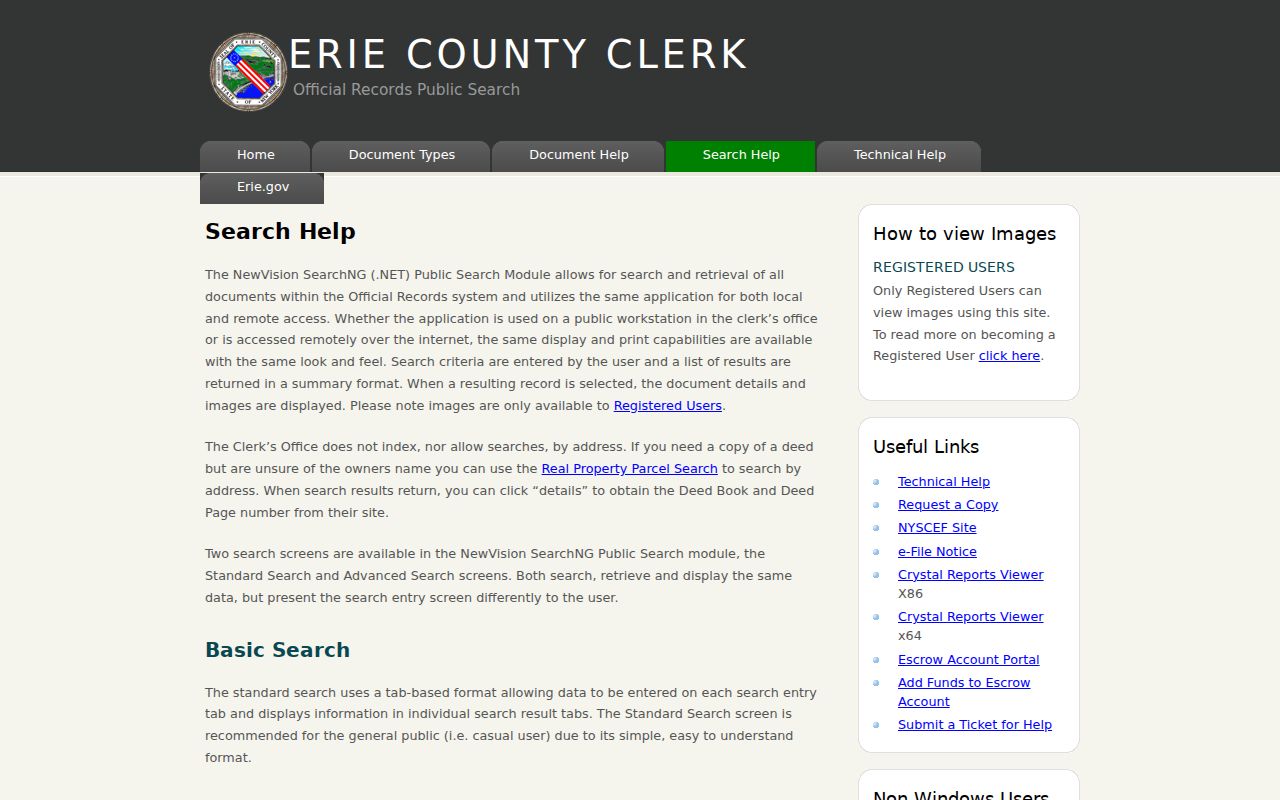
The search mode can narrow an instrument trail, but it does not replace the book and page path for older material.
Erie County Previous Residents And Streets
A street number by itself is fragile historical evidence. Erie County's Buffalo street-name guide pairs modern and former names, including Amherst and Ferry, Porter and Guide Board, Seneca and Seneca Mills, and South Park and Ohio. The guide supplies the former-name relationships but does not give an effective year for each change. For an exact date, compare historic maps, the 1896 Bureau of Engineering index, and the legal description in the deed.
When an old address fails, search both name forms, test a neighboring number, and preserve any ward, election-district, or block notation from the directory or census. Compare frontage, depth, lot and block language, and adjacent owners when a parcel changed shape. The legal description is usually more durable than a street number. The Erie County street directory provides the fuller current address and parcel workflow.
Note: The Erie County street-name guide supplies former-name pairs, but an effective year for any individual change requires separate map and record research.
Tracing Erie County Previous Residents
A chain of title is the backward sequence of transfers for the same parcel. Start at the Erie County parcel search or GIS viewer, record the current owner, SBL or PIN, parcel narrative, current deed date, and legal description, then retrieve the current acquisition deed. The seller in that deed is the next name to seek as a prior grantee. The legal description, not the current street number, is the test that the next transfer concerns the same property.
- Find the exact situs address in the Erie County parcel search and capture the SBL or PIN, municipality, owner, deed date, and legal description.
- Search the current owner's acquisition deed in the Clerk index by party, parcel identifier, legal terms, or the known book and page.
- Read the seller or grantor on that deed, then search that person as a grantee in the preceding time window.
- Repeat the transfer sequence while comparing legal description, lot or block wording, frontage, depth, and adjacent owners.
- At an online or image cutoff, move to Graves Index, Liber or Book and Page, the Clerk records room, or a focused document request.
- Grantor and grantee
- The grantor transfers an interest in property. The grantee receives that interest. In a backward chain, a later grantor is often the earlier grantee.
- Chain of title
- The sequence of recorded instruments used to trace who held title to one parcel over time.
- Legal description
- The lot, block, map, metes-and-bounds, or narrative land description in a record. It is safer than a street number when addresses change.
- Liber
- An older bound-volume reference used with a book and page to locate a recorded instrument or image.
A deed proves a title transfer, not who slept at the address. Executor deeds, foreclosures, corporate conveyances, and probate transfers can interrupt a simple owner-to-owner line. Record execution and recording dates separately, and do not treat a mortgage satisfaction as an occupancy event.
Erie County Previous Resident Deed Books
Older records require a focused request. The Erie County Clerk's browser-compatible BrowserView search exposes party, document, parcel, map number, legal-description, date, and book or page choices. It does not have a direct address field. The Erie County workflow is address to parcel search, then SBL or deed reference to the land-record index. That bridge is especially important for address history because a modern address can hide an older lot description.
The online document-request form accepts a document type, approximate filing date, name on document, address context, book, page, and index or file number. The Clerk says it will contact the requester within two business days. One attachment up to 1 MB is accepted. Certified copies cannot be emailed, and mail requests need the appropriate payment and a postage-paid return envelope. A supplied book and page avoids the Clerk's search fee.
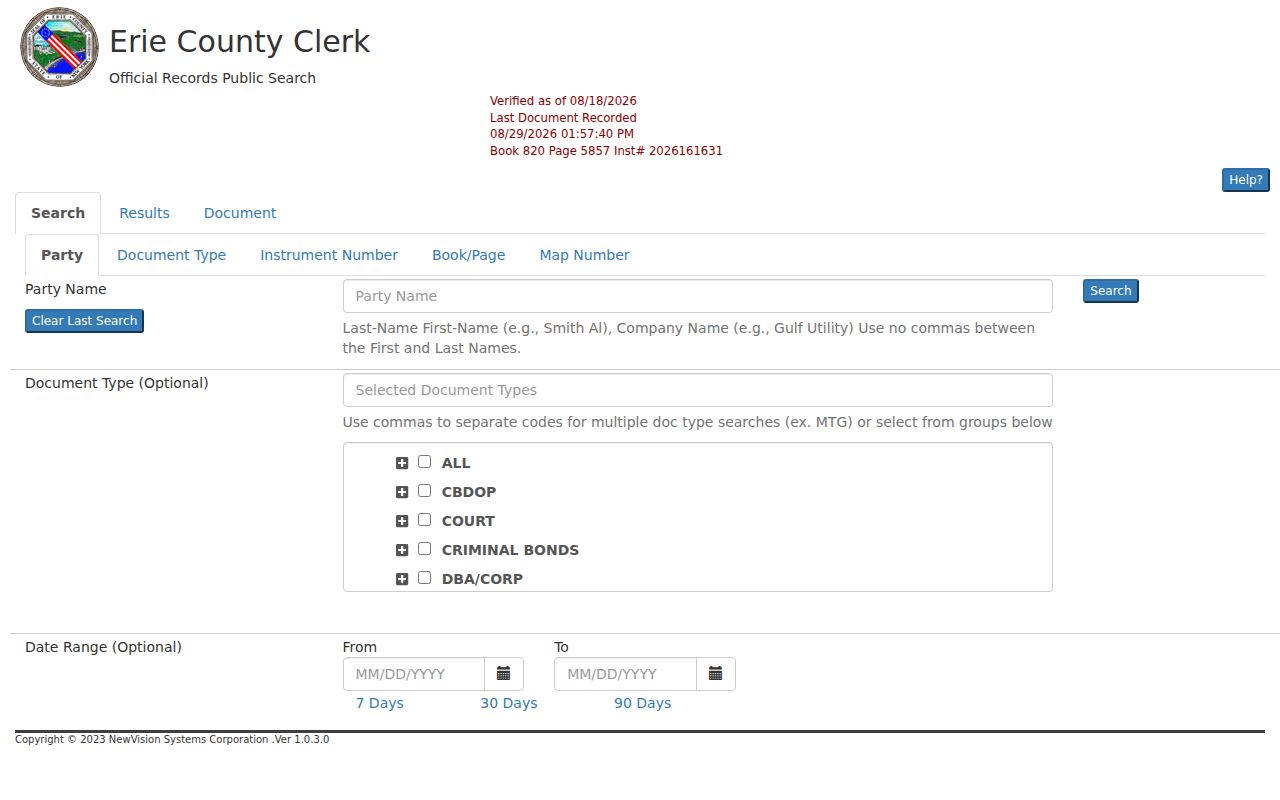
Use the index fields to request one instrument or a narrow range, rather than asking the office for every record related to a surname.
For a 1958 court file, a pre-1960 deed, or another older record, the County Clerk can retrieve material on request. New York FOIL is a route for existing agency records when no specific confidentiality rule controls, but it does not override sealed, vital, protected-voter, or other exempt material.
The Erie County Clerk document-request form shows the fields used to describe one record and attach supporting material.
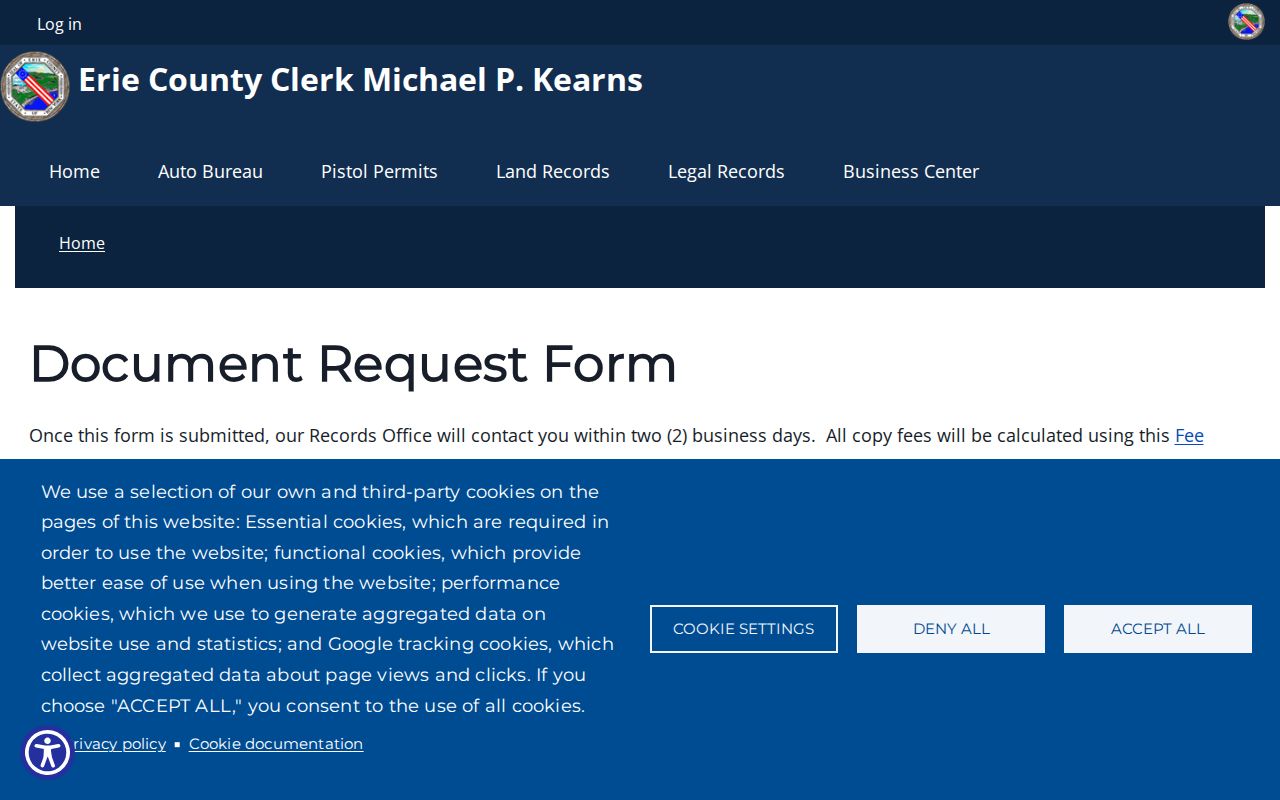
Give the Clerk the former street name, municipality, approximate year, SBL or PIN, and a known book or page when available.
Erie County Previous Residents in Directories
Title records are only half of the address story. Buffalo city directories have a run described as 1828 to present, with address or reverse sections generally available from 1929. A reverse, or criss-cross, directory is arranged by address rather than name. Use the address section for the relevant year, then move to the alphabetical entry for spouse, occupation, and owner or renter marks. Publishers can miss a year, and early volumes often omit minors, boarders, and many women.
- Choose the directory year closest to the transfer, building change, or family event you are testing.
- Search the address or reverse section, including former street names and neighboring numbers if the exact address fails.
- Read the matching alphabetical entries and preserve the printed spelling, spouse, occupation, and abbreviation marks.
- Pair the result with the nearest federal or New York census and retain the ward, block, or election-district notation.
- Use a deed, probate file, obituary, or permit to resolve conflicts between people with similar names.
The Erie County city directory collections identify the local shelves, digitized volumes, and publisher runs. The household timeline should state what each source proves: a publisher's listing, a census household, a title transfer, or an estate relationship.
Note: A reverse directory can identify a dated occupant listing, while the corresponding deed sequence remains the evidence for title.
Erie County Previous Resident Address Maps
When the deed chain is sparse, add evidence that dates the place itself. Buffalo permits in the public-data inventory begin January 2, 2007. City tax and assessment books run from 1815 through 1837 in bound volumes and from 1838 through 1997 on microfilm. Sanborn maps, available through local library resources and the Library of Congress, can show a building footprint, lot and block context, use, and nearby structures. They are useful dating tools, but they are not title evidence.
The Erie County Clerk genealogy holdings include Buffalo census microfilm from 1850 through 1925 and naturalization material from 1827 through 1929. The Buffalo History Museum and B&ECPL Grosvenor Room add address books, directories, assessor maps, newspapers, obituaries, cemetery material, and a house-history bibliography. Those shelves explain a gap without converting an old address clue into a claim about a living person.
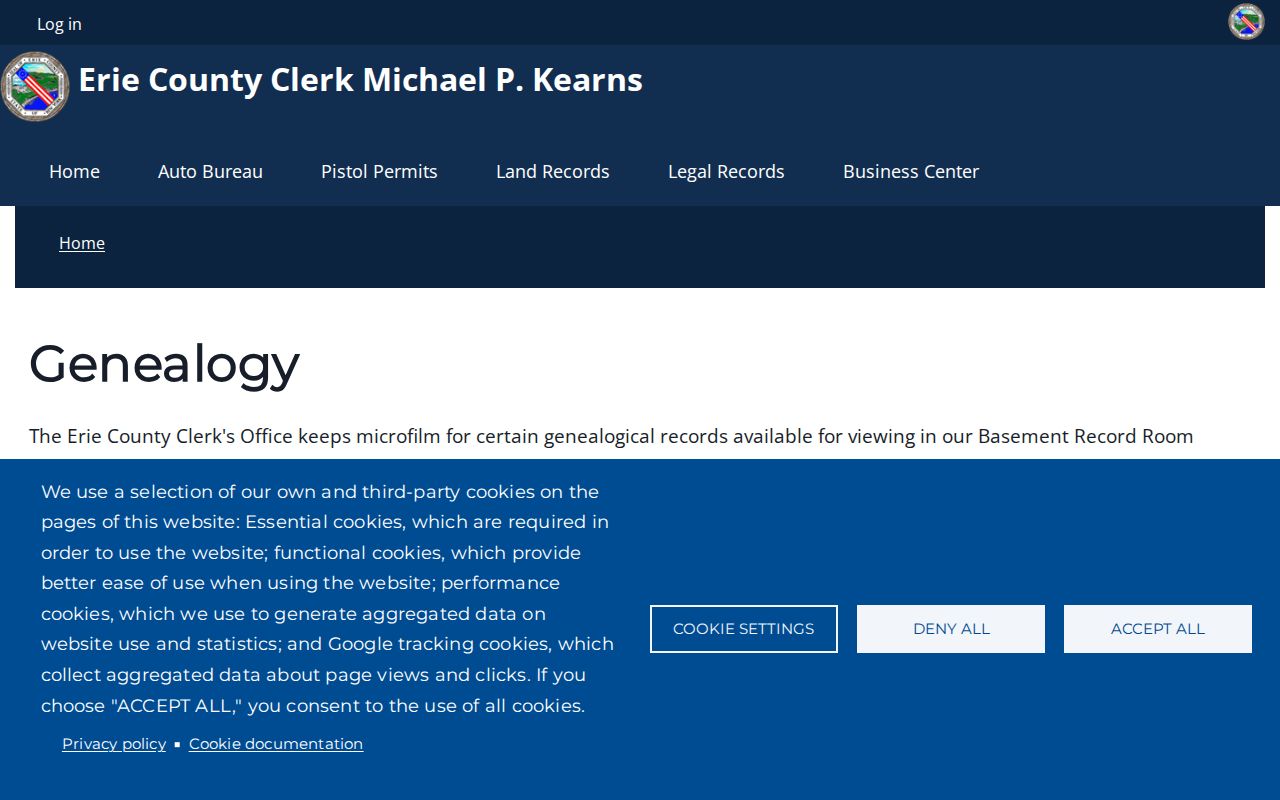
The county genealogy holdings are a practical in-person route when online entries end before the period being traced.
Lawful Erie County Previous Resident Use
Past residents research is best used for house history, family history, estate questions, and local history. Keep a dated evidence table with source, identifier, name, address or legal description, date, status, and confidence. That table makes it clear whether a name came from a deed party, directory, census, tax record, permit, obituary, or probate filing. It also makes a later correction possible without circulating a broad list of people.
Do not use a historical address trail to track, harass, intimidate, or expose a living person. New York's Address Confidentiality Program and confidential voter rules can make an absence intentional, and public availability does not erase the anti-harassment limits in state law. When an old parcel result conflicts with current information, retain the date and consult the custodian rather than attempting to force continuity.
Note: A mailing address, deed party, directory entry, and census resident are different historical facts. Preserve the label and year beside each one.