
Finding Erie County Residents
No single public list names everyone in the county. Each useful record is narrower than that. Erie County's parcel and tax system links an address to its owner, mailing address, and tax identifier, while the County Clerk's land index connects parties to deeds and other instruments. Older households are often easier to trace through the Buffalo & Erie County Public Library than through a modern portal. Every source answers a different question. Call a result what it is: an owner, a party, a voter, or a historical listing.
Start from a full name only when the spelling and municipality are clear. Start from an address when the task concerns property. Buffalo records may sit with city offices. Amherst, Hamburg, and Lackawanna keep their own registrars. For older research, keep the ward, municipality, former street name, and year close at hand. Those details often explain an apparent dead end.
- Use the parcel search to find the situs address, owner, and SBL or tax identifier.
- Check the Clerk’s index for the relevant deed party, instrument, or book and page.
- Use the New York voter tool only for its intended self-service confirmation route.
- Compare a historical address with Buffalo directories, census microfilm, or newspapers.
- Make a narrow request to the custodian when the online coverage starts too late.
Note: A missing result can mean a portal cutoff, a changed name, a protected address, or the wrong municipality rather than proof that no one ever lived in Erie County.
Erie County Offices For Resident Records
Erie County spreads resident records across several offices. The County Clerk holds deeds, liens, judgments, older court material, DBAs, and related filings. GIS ties a street address to its parcel. Real Property Tax Services stands behind the rolls. The elections office controls voter-record access. Buffalo's City Clerk and the state health department handle vital records. Event location and date decide which office you need. For a street-by-street chain, the Erie County street directory's parcel and deed sequence does the work.
Erie County Clerk
92 Franklin Street
Buffalo, NY 14202
Land, court, and genealogy records
Real Property Tax Services
Erie County parcel systems
Buffalo and county parcels
Address, owner, and SBL searches
Erie County Board of Elections
134 West Eagle Street
Buffalo, NY 14202
716-858-8891
Erie County Parcel Records By Address
The Clerk's land-record search has no direct address field. The county's own workflow starts with a parcel instead. From there you carry the SBL, map number, legal description, book and page, or a party name into the Clerk index. A situs address is where the land sits. A mailing address belongs to the taxpayer and can lie elsewhere. The SBL is the section, block, and lot number that keeps one parcel together as street numbers change. That distinction matters in Buffalo, where former street names and redevelopment weaken a current street number as a historic identifier.
The Erie County GIS On-Map viewer layers parcel geometry over streets, ZIP codes, school districts, and more. It is a generalized map, not a legal survey. Save the roll year, parcel identifier, owner spelling, and deed date from any result. Then check the Clerk instrument before describing title. A tax card names an owner or mailing contact. It does not list every household member.
| Parcel search field | Use in Erie County | What it can return |
|---|---|---|
| Address | Find the situs parcel | Parcel and assessment route |
| Owner name | Test a current owner spelling | Owner-linked parcel results |
| SBL or tax identifier | Use the most precise parcel key | Assessment and tax record |
| GIS address, owner, or SBL | Map a parcel and nearby layers | Popup fields and paytax link |
The Erie County Clerk public records search shows the page that receives those identifiers. It is the next stop after a parcel.
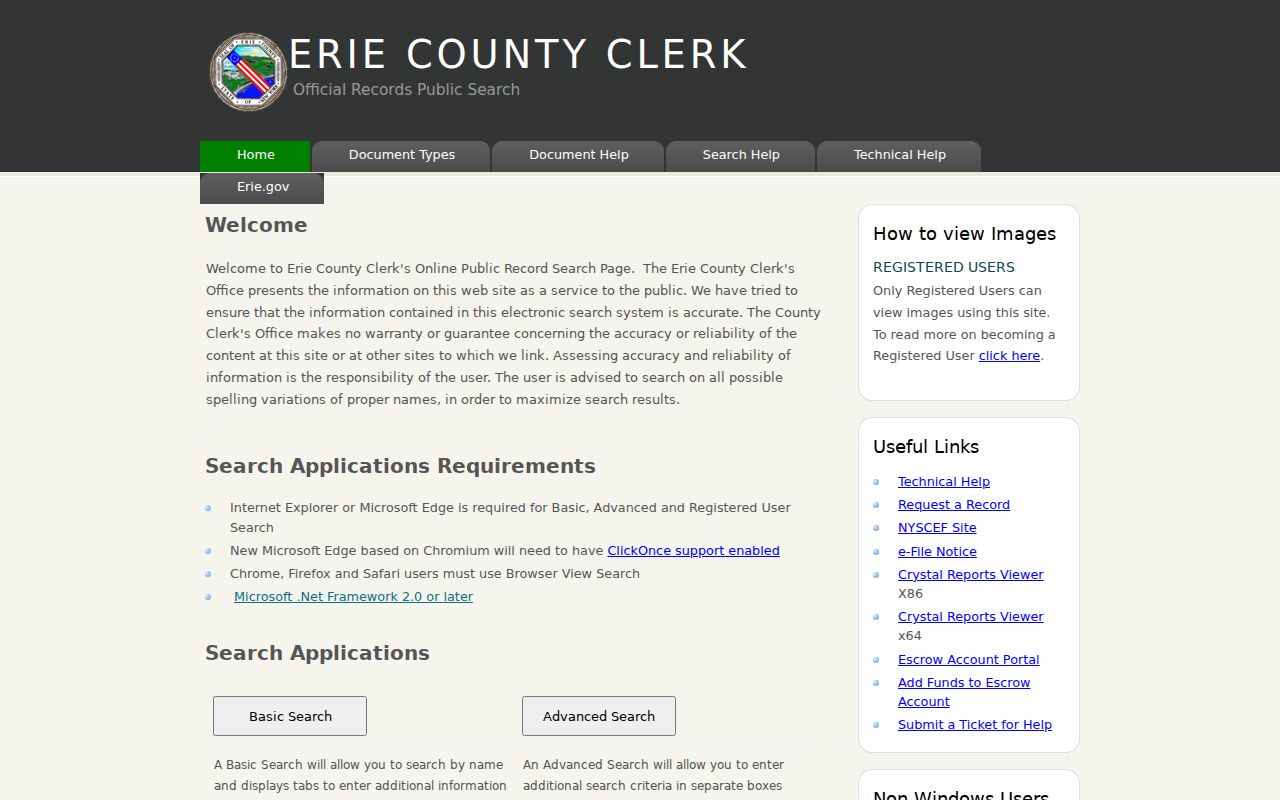
Let the parcel result narrow the Clerk query. A land-record address search will not do that work for you.
Erie County Clerk Record Trails
The Erie County Clerk BrowserView offers basic and advanced searching. Party names appear last name first, without commas. Search fields include document type, instrument number, book and page, map number, parcel ID, date, legal description, and party name. A result can show the instrument number, type, recorded date, book and page, consideration, parcel ID, parties, and linked documents. Anyone can search the metadata. Online images require a registered account. For many non-Windows users, BrowserView is simply the practical route.
Coverage must be read series by series. Deeds are maintained from 1808. The online deed index begins January 1, 1986, and images begin January 1, 1960. Older images can require a Liber or Book and Page through the Graves Index. Some older books still need a visit or request. Mortgages carry their own cutoffs. The Clerk's records-kept schedule is the place to confirm a category before a blank search is read as absence, and the Clerk's records-kept page maps that coverage category by category.
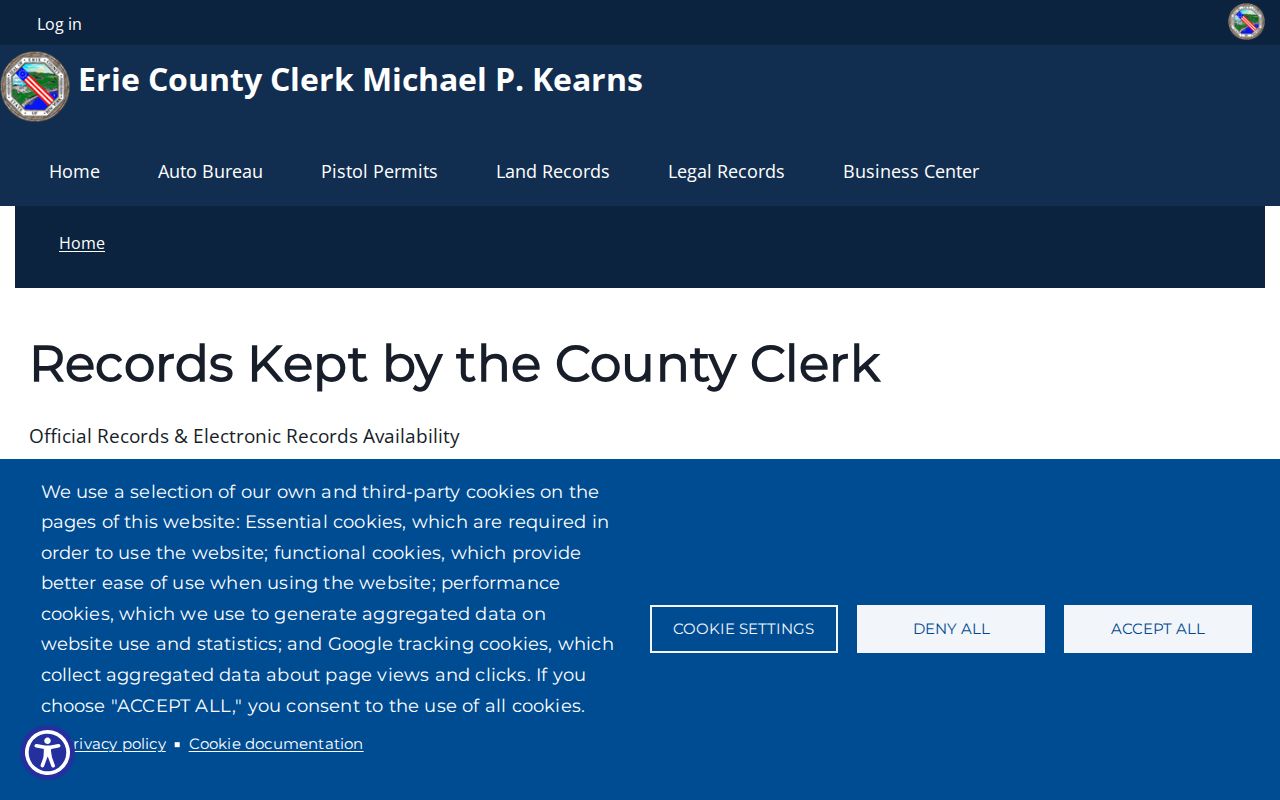
An address becomes a parcel first. Only then does it become a legal description, a party trail, and finally a deed-chain search in Erie County.
Erie County Current Resident Directories
Directory-like sources each cover specific ground. A parcel roll names owners and mailing contacts. A court index lists people in eligible public cases. The voter tool is self-service rather than an address-browsing directory, and license or business databases confirm a public credential or filing without establishing a home. Those limits make a second source essential to any careful Erie County residents directory search.
| Erie County source | What it confirms | Custodian | Access |
|---|---|---|---|
| Parcel and tax roll | Owner, situs, mailing address, SBL | Real Property Tax Services | Public portal |
| Deed index | Recorded parties and title instruments | Erie County Clerk | Modern index, copies or requests |
| Voter self-lookup | Cooperative registration confirmation | New York elections | County, name, DOB, ZIP |
| Eligible court index | Public party appearance | NYS courts and Clerk | Portal or clerk route |
| License or DBA record | Public credential or business filing | NYS DOS or County Clerk | Record-specific search |
A trust, an estate, a corporation, or a mailing agent can sit in Erie County property data without being a household at all. Match two identifiers first. The Erie County resident lookup lays out the record-by-record verification sequence before you settle on one person.
Erie County Voter Lookup Limits
New York's voter registration lookup asks for a county, a last name, a first name, a date of birth, and a ZIP code. It exists for voters checking their own registration. A successful match returns registration or polling details. It was never built as a street browser, so it cannot show who lives on a block in Erie County. Mismatches happen. A different ZIP, a name change, a recent move, inactive status, or a confidential record can all break a match.
Erie County's full-file request form is a different route. It asks the requester for a purpose, geographic scope, format, requested fields, party choices, and an elections-purpose certification. Election Law §3-103(5) restricts voter-list use. Voting history, when legitimately requested, records participation rather than ballot choices. Old poll books sit elsewhere. The State Archives, Buffalo Records Management, and library microfilm are the likelier homes, and the official voter lookup page shows the limited confirmation inputs it supports.
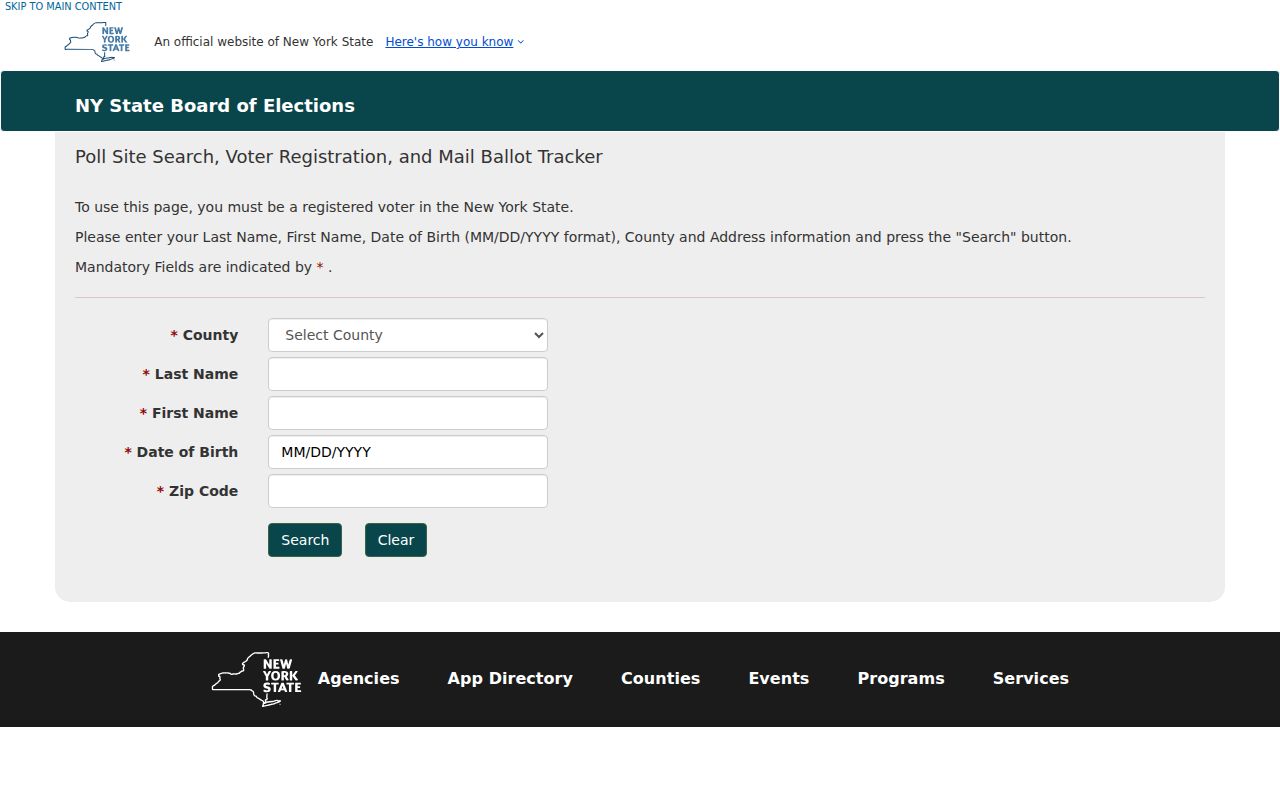
Count a voter match as dated evidence, not a resident roster.
Erie County Court Record Checks
Start with the right court. NYSCEF supports eligible searches by case identifier and name. It also covers county, case type, date, and certain block-and-lot fields. Erie e-filing has its own dates and covered case types. WebCivil, E-Track, WebCriminal, local clerks, Surrogate's Court, and federal PACER each cover different material. Sealed, family, adoption, and youthful-offender matters stay out of ordinary public results.
Vital records run on a different logic. They follow the event location and an eligibility rule. Buffalo events before January 1, 1914 stay with the City Clerk. The state Health Department handles genealogy copies under age rules. Births generally need 75 years plus a known death. Deaths need 50 years. Marriages need 50 years with both spouses deceased. Public Health Law §4173 governs certified birth access. A library index can supply a lead, but the registrar controls the certificate. The official New York genealogy access page shows the distinct state route for older events.
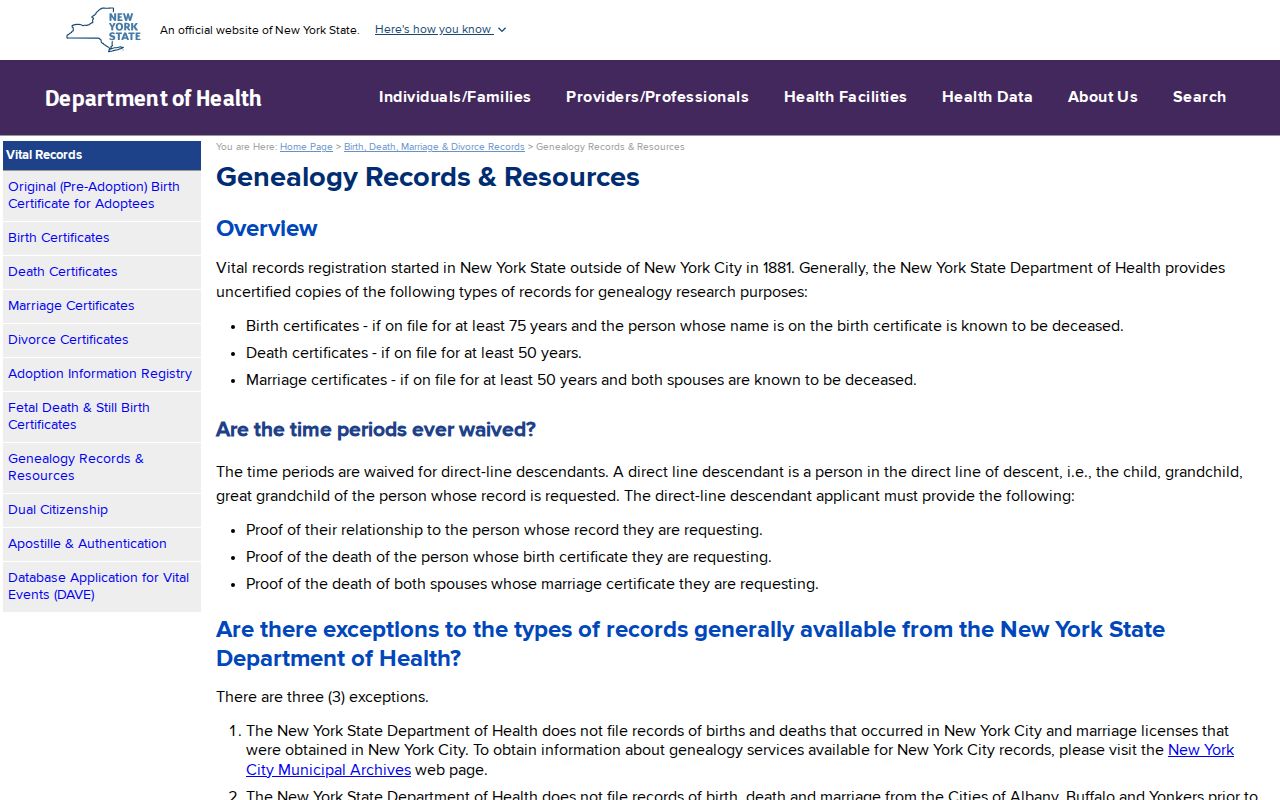
Keep court parties, vital events, and residence claims separate. Tie them together only when dates and independent records genuinely line up.
Erie County Municipal Record Collections
Buffalo adds a deep municipal layer to any Erie County residents directory search. The Buffalo City Clerk at 65 Niagara Square, Room 1308 holds the city's birth, marriage, and death records. Dog licenses, ordinances, and Common Council records live there too. Buffalo Records Management works differently. It runs from the Inactive Storage Center at 45 Comet Street, by appointment. The published holdings are rich. Assessor land maps date from 1855, 1870, and 1912. Birth indexes span 1878 to 1915. Death indexes run 1852 to 1944. Marriage indexes cover 1877 to 1935. Erie County census microfilm from 1850 to 1925 rounds out the shelves. Incomplete Polk directories and tax and assessment books add more.
Check the Buffalo Records Management inventory when a city record predates a web portal. It also helps when a directory year is missing. Listed historical material carries no access fee. A genealogy vital-record copy can still cost something. Remember that the City Clerk, the library, and the Records Management Center are separate custodians. State the Buffalo event or address. Give the record type, the approximate date, and the exact identifier already located.
Erie County Historical Directory Shelves
Old volumes anchor an Erie County residents directory. Buffalo's are the strongest. The Buffalo & Erie County Public Library's Grosvenor Room describes complete Buffalo directory coverage from 1828 to the present, with known publication gaps. Digitized directories span 1832 to 1913. New York Heritage carries them, beside yearbooks, obituaries, census records, and local vital indexes. Later reverse or criss-cross sections work from an address. They point to a listed household. A listing is historical evidence, though, not proof of residence. The Buffalo History Museum holds Buffalo directories from 1828 through 2001 and suburban runs from 1949 through 2001. Buffalo Records Management adds incomplete Polk directories, census microfilm, tax books, and land maps. Compare before trusting. Set an address section beside the alphabetical entry, the abbreviation key, a census page, and a deed or obituary, with fuller collection detail in the Erie County city directory.
- Roll
- A dated list created for one administrative purpose, such as assessment or registration.
- Index
- A finding aid that identifies a record but may not include the image or full file.
- Criss-cross directory
- An address-organized directory that can point from a street number to a historical listing.
- Parcel
- A defined piece of land identified by an SBL, PIN, or legal description.
Erie County Record Digital Cutoffs
Erie County records are not one smooth timeline. The Clerk holds deeds dating to 1808. Online index and image access, though, begins decades after that point. Buffalo city directories run long but with gaps in the edition sequence. Permit data starts in 2007. Code violations start in 2016. E-filed material follows its own NYSCEF cutoffs. A search log recording the portal, date searched, spellings tried, coverage start, and result identifier lets anyone retrace the route or request the older paper record.
Former Buffalo street names deserve a check too. The city guide pairs current names with old ones, such as Amherst with Ferry and Porter with Guide Board Road. It gives no effective years. A year-specific conclusion therefore still needs a historic map, a city record, or a deed legal description. That check saves trouble when an old directory entry seems to vanish from a modern map.
Note: Erie County’s free historical GIS data reaches back to 1999, but that archive does not replace the Clerk’s older deed books or the city’s microfilm.
Erie County Privacy Boundaries
A property record is not a household roster. Renters, boarders, utility customers, delivery recipients, and many household members simply never appear in it. New York’s Address Confidentiality Program helps some residents. Executive Law §108 can give qualifying participants a substitute mailing address. Election Law §5-508 protects qualifying voter registrations. Court sealing, vital-record rules, and the federal Driver’s Privacy Protection Act can also limit access.
Lawful personal use. Erie County records can support family history, estate work, personal safety, and civic research. Do not use an address, name, or record trail to stalk, harass, intimidate, or harm anyone.
A missing name is not a finding. Never announce that someone is protected or absent. The responsible office can explain a record’s access rule without exposing protected data. A correction request, likewise, belongs with the custodian that created the record, not with a search result copied somewhere else.
Erie County Official Sources Compared
Official records move slower than a compiled people-search category. They name the keeper, the date, the field, and the access limit. An error is therefore easier to challenge. Commercial categories can blend old addresses and name variants, but they may merge namesakes or keep stale entries. For a meaningful Erie County residents directory result, treat the custodian’s parcel card, court docket, Clerk instrument, library volume, or state lookup as the verification layer. The official copy should settle any doubt.
| Source type | Strength | Limit |
|---|---|---|
| Official custodian record | Dated source and correction path | Often series-specific or restricted |
| Library or archive collection | Historical context and older coverage | Listing may not prove current status |
| Compiled commercial category | Can supply a lead | May be stale or combine same-name people |
Ask for the smallest record that answers the question. The Clerk, court, library, or registrar can usually supply it. A narrow request with a name, municipality, approximate date, and known identifier beats a demand for everything tied to a person.
Tracing Erie County Record Gaps
When the online trail ends, keep the last solid identifier and pick the next custodian. Pre-1986 deed index work may need book and page searches. A Buffalo historical household may need the Grosvenor Room, the History Museum, or Records Management. A death or marriage may need the local registrar. The county office is not always the right desk for those events. New York’s Freedom of Information Law, Public Officers Law Article 6, §§84-90, is a route to existing agency records. It cannot override sealing, vital-record restrictions, or protected voter status.
Erie County’s research value lies in these cross-references. Parcel leads to SBL. SBL leads to deed. Directory entries lead to census pages. Event indexes lead to the issuing office. Label each fact by source and date, and stop when the records will not support a confident match.